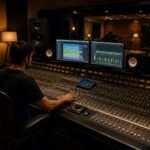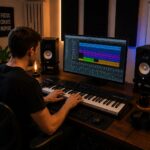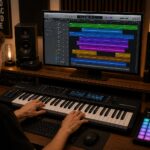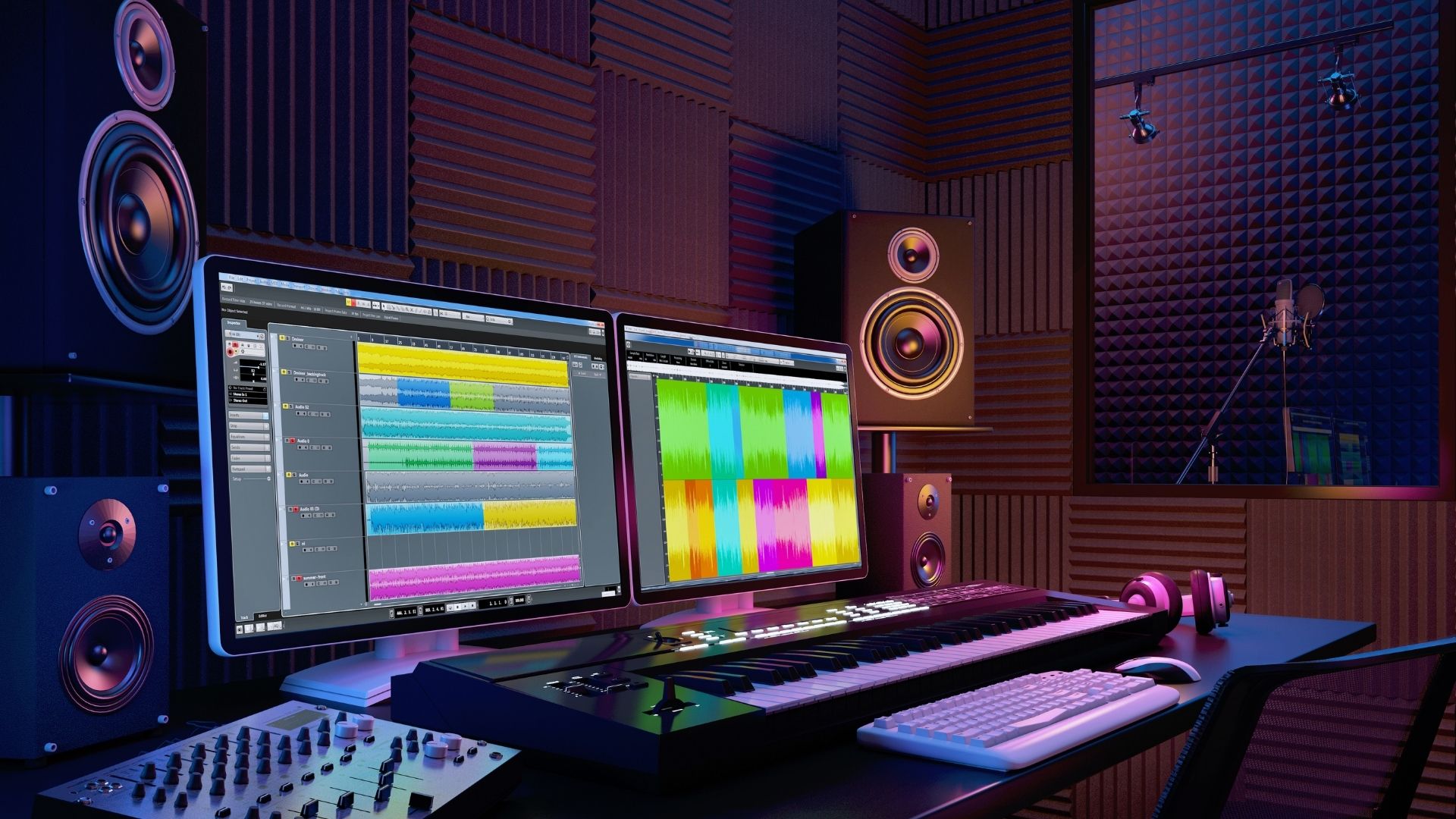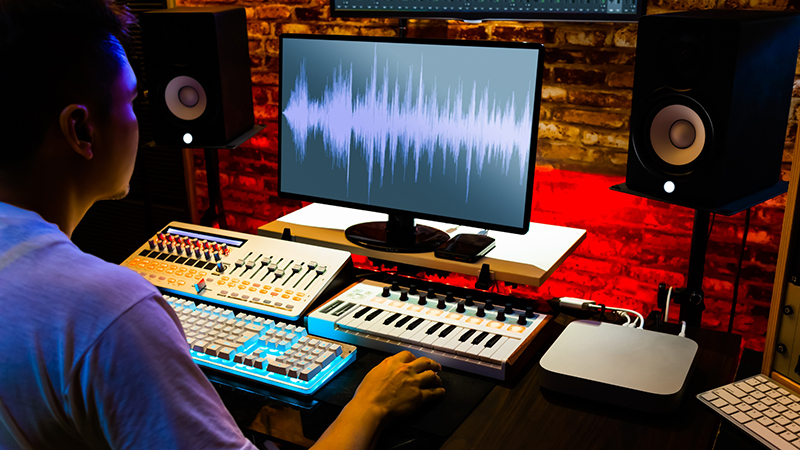
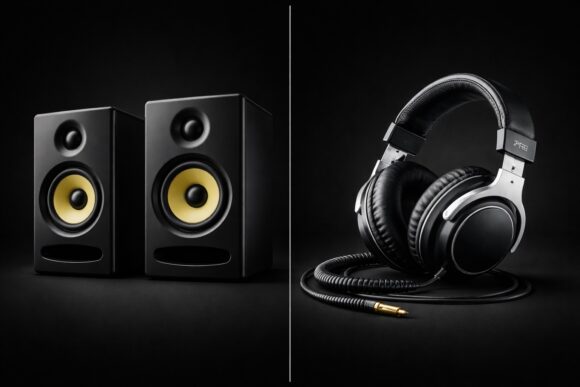
Accurate monitoring is one of the most important elements of music production. No matter how good your skills are, poor monitoring can lead to mixes that don’t translate well to other systems. One of the most common questions producers ask is whether it’s better to mix on studio monitors or headphones.
In this article, we’ll compare both options and explain how to choose the right monitoring setup for your workflow.
What Is Studio Monitoring?
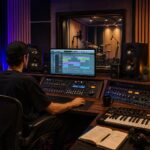
Studio monitoring refers to how you listen to and evaluate your audio during recording, mixing, and mastering. The goal is not to make music sound “good,” but to hear it accurately and honestly.
Good monitoring helps you:
- Make better mix decisions
- Hear problems clearly
- Create mixes that translate across systems
Studio Monitors – Strengths and Weaknesses
Advantages of Studio Monitors
Studio monitors are designed to produce a flat and neutral frequency response.
Key benefits:
- Natural stereo imaging
- Realistic low-end perception
- Physical sense of space and depth
- Better balance decisions
Monitors allow you to hear how sound behaves in a real room, similar to how listeners experience music.
Disadvantages of Studio Monitors
Despite their benefits, monitors have limitations:
- Strongly affected by room acoustics
- Require acoustic treatment for best results
- Not ideal for small or untreated rooms
- Can be impractical in apartments or shared spaces
Without proper room treatment, monitors may sound misleading.
Headphones – Strengths and Weaknesses
Advantages of Headphones
Headphones provide a controlled listening environment, independent of the room.
Key benefits:
- No room acoustics issues
- Excellent detail and clarity
- Ideal for late-night work
- Affordable and portable
They are especially useful for:
- Editing
- Noise detection
- Fine EQ adjustments
Disadvantages of Headphones
However, headphones also have drawbacks:
- Unrealistic stereo width
- Fatigue during long sessions
- Difficult low-end judgment
- Sound occurs “inside the head” rather than in space
Mixes done only on headphones may not translate well to speakers.
Open-Back vs Closed-Back Headphones
- Open-back headphones offer a more natural sound and wider image
- Closed-back headphones provide isolation and are better for recording
For mixing, open-back models are usually preferred.
Which Is Better for Mixing?
The truth is: neither is perfect on its own.
Best practice:
- Use studio monitors for balance and spatial decisions
- Use headphones for detail and precision
Many professionals switch between both during a session.
Budget and Space Considerations
If you:
- Have a treated room → monitors are a great investment
- Work in a small or untreated room → headphones may be more reliable
- Have limited budget → good headphones offer excellent value
Your environment matters as much as your gear.
Translation Is the Real Test
Regardless of your monitoring choice:
- Check mixes on multiple systems
- Use reference tracks
- Listen on earbuds, car speakers, and consumer headphones
Good monitoring helps, but translation testing is essential.
Common Monitoring Mistakes
- Mixing too loud
- Relying on one listening system only
- Ignoring room acoustics
- Over-trusting expensive gear
Your ears and experience matter more than equipment price.
Choosing between studio monitors and headphones is not about right or wrong—it’s about understanding their strengths and limitations. The best results often come from using both together, even in a home studio setup.
Accurate monitoring leads to better mixes, better decisions, and better music.