Mastering is often seen as a mysterious final step in music production. While mixing focuses on balancing individual tracks, mastering is about shaping the entire song as a finished product. Understanding what mastering is—and what it is not—is essential for any producer who wants their music to sound professional and translate well across different playback systems.
This article introduces the fundamentals of mastering and explains its role in the production process.
What Is Mastering?
Mastering is the final stage of audio production, where a finished mix is prepared for release. The goal is to enhance the overall sound, ensure consistency, and optimize the track for various playback systems and formats.
Mastering works on:
- A stereo mix (or stems)
- The entire song, not individual tracks
The Purpose of Mastering
Mastering serves several key functions:
- Ensuring consistent loudness and tone
- Enhancing clarity and balance
- Improving translation across systems
- Preparing audio for distribution
A good master should sound polished but natural, without changing the artistic intent of the mix.
Mastering vs Mixing
Understanding the difference is crucial.
Mixing
- Works on individual tracks
- Balances levels and panning
- Applies EQ, compression, and effects per track
Mastering
- Works on the final stereo file
- Applies subtle, global processing
- Focuses on cohesion and consistency
Mastering does not fix major mix problems—it enhances a good mix.
Common Mastering Tools
Mastering uses a focused set of tools, usually applied subtly.
Equalization (EQ)
Used to adjust overall tonal balance and correct minor frequency issues.
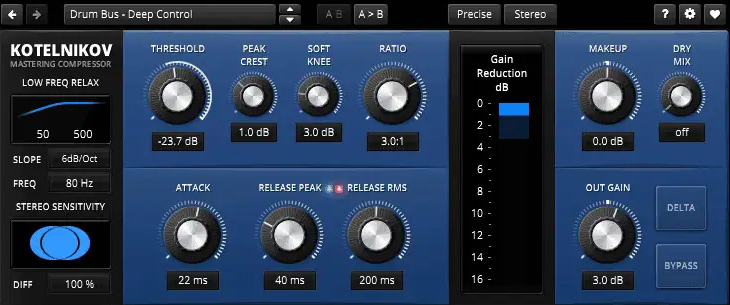
Compression
Controls overall dynamics and adds cohesion.
Limiting
Increases perceived loudness while preventing clipping.
Saturation
Adds subtle warmth and harmonic richness.
Stereo Imaging
Adjusts width and mono compatibility carefully.
Loudness and Headroom
Modern mastering must consider loudness standards.
Key concepts:
- LUFS for perceived loudness
- True peak levels to avoid distortion
- Headroom from the mix (typically around -6 dBFS)
Mastering balances loudness with dynamics and clarity.
Mastering for Different Formats
Mastering also prepares audio for:
- Streaming platforms
- Digital downloads
- CD
- Vinyl
Each format has its own technical requirements.
Home Mastering vs Professional Mastering
Home mastering is great for:
- Learning the process
- Demos and personal releases
- Budget-limited projects
Professional mastering offers:
- Trained ears
- High-end monitoring
- Objective perspective
Both have their place, depending on the project.
Common Mastering Mistakes
- Over-limiting
- Excessive EQ boosts
- Chasing loudness at the cost of dynamics
- Mastering without reference tracks
- Working on poor monitoring
Subtlety is key in mastering.
A Simple Mastering Workflow
- Start with a clean, balanced mix
- Leave headroom
- Apply gentle EQ and compression
- Use limiting carefully
- Compare with reference tracks
- Check on multiple systems
Mastering is about polish, consistency, and translation. It is not about making drastic changes, but about bringing a mix to its final, release-ready form.
Understanding the basics of mastering will help you make better mixes and communicate more effectively with mastering engineers.