
Understanding sound is the foundation of music production. You don’t need to be a physicist or audio engineer, but knowing how sound works will help you make better creative decisions, improve your mixes, and communicate more effectively with other producers.
In this article, we’ll cover the essential sound theory concepts that every music producer—beginner or intermediate—should understand.
1. What Is Sound?
At its core, sound is vibration. When an object vibrates, it creates waves that travel through the air (or another medium) and reach our ears. Our brains interpret these vibrations as sound.
In music production, sound is represented digitally as an audio signal, but it still follows the same physical principles.
2. Frequency – Pitch Explained
Frequency refers to how fast a sound wave vibrates and is measured in Hertz (Hz).
-
Low frequencies = low-pitched sounds (bass, kick drum)
-
High frequencies = high-pitched sounds (hi-hats, cymbals, air)
Human Hearing Range
-
Approx. 20 Hz – 20,000 Hz
-
Most musical content lives between 40 Hz – 15 kHz
Understanding frequency helps you:
-
Use EQ effectively
-
Avoid muddy mixes
-
Know where instruments sit in the spectrum
3. Amplitude – Loudness and Volume
Amplitude describes the strength of a sound wave and is perceived as loudness.
In digital audio, loudness is measured in:
-
dB (decibels)
-
dBFS (decibels relative to full scale)
Key concepts:
-
Louder is not always better
-
Proper gain staging prevents distortion
-
Headroom is essential for clean mixes
Managing amplitude correctly is the foundation of good mixing.
4. Waveforms – The Shape of Sound
A waveform is the visual representation of sound over time.
Common waveform types:
-
Sine wave – smooth, pure tone (no harmonics)
-
Square wave – aggressive, rich in harmonics
-
Sawtooth wave – bright and full (common in synths)
-
Triangle wave – softer but harmonically rich
Knowing waveform shapes helps you:
-
Design better synth sounds
-
Understand timbre and tone
-
Choose the right sound for the right role
5. Harmonics and Timbre
Two sounds can play the same note but still sound different. Why?
The answer is harmonics.
-
Fundamental frequency = the main pitch
-
Harmonics (overtones) = additional frequencies above it
The combination of harmonics creates timbre, which is the character or color of a sound.
Example:
-
A piano and a guitar playing the same note sound different because of their harmonic content.
6. Phase – A Hidden Mixing Problem
Phase describes the timing relationship between sound waves.
When sounds are:
-
In phase → louder, fuller sound
-
Out of phase → weaker sound or cancellation
Phase issues often occur when:
-
Recording with multiple microphones
-
Layering similar sounds
-
Using stereo effects
Understanding phase helps you avoid thin mixes and unexpected loss of low end.
7. Time-Based Properties of Sound
Sound exists over time, not just frequency.
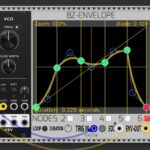
Important time-related concepts:
-
Attack – how quickly a sound reaches full volume
-
Decay – how fast it fades after the attack
-
Sustain – how long it stays loud
-
Release – how long it takes to fade out
These are commonly referred to as ADSR, especially in synthesizers and compressors.
8. Digital Audio Basics
Modern music production is digital, so these terms matter:
-
Sample rate – how often audio is captured per second (e.g. 44.1 kHz)
-
Bit depth – how detailed each sample is (e.g. 24-bit)
-
Clipping – distortion caused by exceeding digital limits
Higher values generally mean better quality—but also higher CPU and storage usage.
9. Why Sound Theory Matters for Producers
Understanding sound theory helps you:
-
EQ with intention, not guesswork
-
Choose sounds that work well together
-
Avoid technical problems early
-
Work faster and more confidently
-
Translate your music better across systems
It turns random knob-turning into purposeful production.
Sound theory doesn’t kill creativity—it supports it. The more you understand how sound behaves, the easier it becomes to shape it into something musical, emotional, and powerful.
You don’t need to learn everything at once. Start with frequency, loudness, and waveforms—and build from there. Every great producer, whether they realize it or not, relies on these fundamentals.