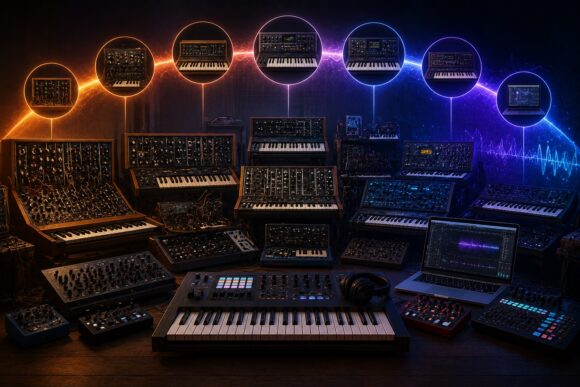
Synthesizers have transformed the way music is created. From the experimental electronic instruments of the 1960s to today’s software synthesizers powered by artificial intelligence, they have shaped countless genres, inspired generations of musicians, and revolutionized music production.
Whether you’re producing electronic music, hip-hop, pop, film scores, or rock, chances are you’re using sounds that originated from decades of synthesizer innovation.
In this article, we’ll explore the fascinating history of synthesizers—from the earliest analog machines to the modern virtual instruments that fit inside your computer.
What Is a Synthesizer?
A synthesizer is an electronic instrument that generates sound using oscillators, filters, amplifiers, envelopes, and modulation.
Unlike traditional instruments that rely on strings, reeds, or percussion, synthesizers create sound electronically, allowing musicians to design entirely new timbres.
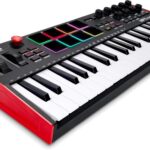
Today, synthesizers exist as:
- Hardware instruments
- Software plugins (VSTi)
- Mobile apps
- Modular systems
The Early Days (1950s–1960s)
Electronic music existed long before synthesizers became commercially available.
Early pioneers experimented with:
- Tape manipulation
- Oscillators
- Laboratory equipment
- Custom-built electronic circuits
These early experiments laid the foundation for modern synthesis.
However, the equipment was enormous, expensive, and difficult to operate.
Everything changed during the 1960s.
The Birth of the Moog Synthesizer
In 1964, engineer Robert Moog introduced one of the first commercially successful modular synthesizers.
The Moog Modular allowed musicians to connect modules using patch cables.
These modules included:
- Oscillators
- Filters
- Envelope generators
- LFOs
- Amplifiers
For the first time, musicians could build entirely new sounds from scratch.
The Moog quickly became the symbol of electronic music.
The Minimoog Revolution (1970)
Although modular systems were powerful, they were also expensive and difficult to transport.
In 1970, Moog released the legendary:
Minimoog Model D
This compact instrument changed everything.
Why it became legendary:
- Portable design
- Three powerful oscillators
- Famous ladder filter
- Immediate hands-on controls
The Minimoog became famous for:
- Massive bass
- Smooth leads
- Warm analog character
Even today, it’s considered one of the greatest synthesizers ever built.
The Rise of Polyphonic Synthesizers
Early synthesizers were monophonic—they could play only one note at a time.
During the late 1970s and early 1980s, manufacturers introduced polyphonic synthesizers capable of playing chords.
Some of the most influential models included:
- Sequential Prophet-5
- Roland Juno-60
- Roland Juno-106
- Oberheim OB-X
These instruments became staples of pop, rock, and film music throughout the 1980s.
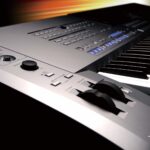
The Digital Revolution
The 1980s introduced an entirely new concept:
Digital synthesis.
Instead of analog circuits, digital synthesizers used computer chips to generate sound.
The biggest breakthrough came with:
Yamaha DX7
Released in 1983, the DX7 popularized Frequency Modulation (FM) synthesis.
It offered:
- Crystal-clear electric pianos
- Bells
- Metallic textures
- Excellent tuning stability
The DX7 became one of the best-selling synthesizers in history.
Sampling Changes Everything
At the same time, manufacturers began developing digital samplers.
Instead of creating sounds electronically, samplers recorded real audio.
Legendary machines included:
- Fairlight CMI
- E-mu Emulator II
- Akai S1000
These instruments transformed film scoring, pop production, and hip-hop.
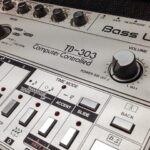
The Analog Comeback
During the 1990s, digital synths dominated the market.
However, producers soon began missing the warmth and imperfections of analog equipment.
This led to the revival of classic analog synthesizers and the release of new instruments inspired by vintage designs.
Manufacturers such as:
- Moog Music
- Sequential
- Korg
- Arturia
helped bring analog synthesis back into mainstream production.
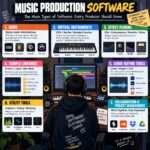
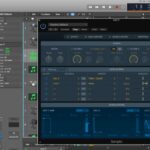
The Rise of Software Synthesizers
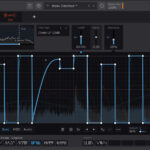
As computers became more powerful, software instruments emerged.
Virtual synthesizers offered many advantages:
- Lower cost
- Unlimited instances
- Easy automation
- Preset management
- No physical space required
Some of the most influential software synthesizers include:
- Native Instruments Massive
- Xfer Serum
- Spectrasonics Omnisphere
- Vital
Today, many producers work almost entirely “in the box.”
Modular Synthesis Returns
Modular synthesis has experienced a huge resurgence.
Modern Eurorack systems allow musicians to build fully customizable synthesizers using hundreds of modules from different manufacturers.
Advantages include:
- Unlimited flexibility
- Experimental sound design
- Hands-on creativity
Although modular systems can be expensive, they remain popular among sound designers and electronic musicians.
Modern Hybrid Synthesizers
Today’s instruments often combine multiple technologies:
- Analog oscillators
- Digital oscillators
- Wavetable synthesis
- FM synthesis
- Sampling
- Granular synthesis
This hybrid approach offers enormous creative possibilities while preserving the warmth of analog circuitry.
Artificial Intelligence and the Future
The newest generation of synthesizers is beginning to incorporate artificial intelligence.
Emerging technologies include:
- AI-generated presets
- Intelligent sound design assistants
- Automatic modulation suggestions
- Adaptive synthesis engines
Rather than replacing creativity, these tools help producers explore ideas more quickly.
Why Synthesizers Remain So Important
Synthesizers have shaped nearly every modern genre, including:
- EDM
- Techno
- House
- Hip-hop
- Trap
- Pop
- Ambient
- Film scoring
- Synthwave
- Lo-fi
From subtle pads to aggressive basslines, they remain one of the most versatile instruments ever invented.
Common Misconceptions
“Analog always sounds better.”
Not necessarily.
Modern software synthesizers can sound remarkably close to their hardware counterparts.
The difference often lies more in workflow and user experience than raw sound quality.
“You need expensive hardware to make professional music.”
Absolutely not.
Many chart-topping tracks today are produced using software synthesizers alone.
Great music comes from creativity and skill—not just equipment.
The history of synthesizers is a story of constant innovation. From the pioneering work of Robert Moog to today’s powerful software instruments and AI-assisted sound design, synthesizers have continually expanded the boundaries of what music can be.
Whether you prefer the warmth of vintage analog hardware, the flexibility of modern software, or a combination of both, understanding the evolution of synthesizers gives you a deeper appreciation for the tools you use every day.
One thing is certain:
As technology evolves, synthesizers will continue to inspire the next generation of producers, composers, and sound designers around the world.