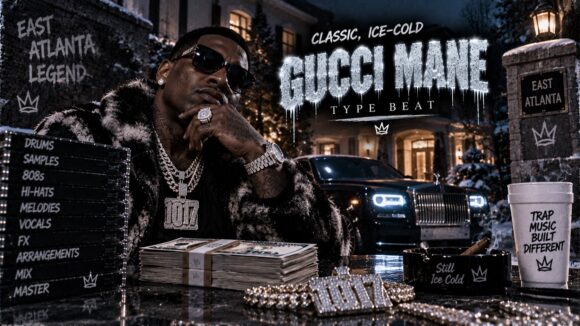
Gucci Mane is the absolute godfather of modern trap music. Alongside legendary Atlanta producers like Zaytoven, Lex Luger, Metro Boomin, and Drumma Boy, Gucci forged a sonic blueprint that changed hip-hop forever. A classic Gucci Mane type beat combines two distinct vibes: the playful, hypnotic piano runs of the “East Atlanta Santa” and the aggressive, trunk-rattling brass layers of the 1017 brick squad.
Here is your step-by-step production guide to crafting a cold, authentic Atlanta trap banger.
1. Lock In the Definitive Atlanta Trap Tempo
Gucci Mane beats rely on a fast, driving half-time tempo that feels energetic in the club but spacious enough for a confident, slow street delivery.
- The Sweet Spot: Set your DAW project tempo between 135 and 145 BPM (working in a double-time grid).
- The Grid: Keep your quantization strictly locked to the digital grid. The rhythm needs a sharp, robotic precision rather than a loose, humanized swing.
2. Mix Playful Zaytoven Pianos with Menacing Brass
The instrumentation of a Gucci Mane beat is iconic because it balances bright, playful melodies with a dark, street-ready edge.
- The Trap Piano: This is the absolute signature element. Use a clean acoustic grand piano to play fast, blues-inspired arpeggios, trills, and continuous runs in a minor scale (like G Minor).
- The Majestic Brass & Strings: Layer heavy, synthetic orchestral brass stabs and dramatic string staccatos to hold down the lower chord frequencies and add instant menace.
- The Retro Synth Bells: Add a simple, high-pitched synthetic bell loop playing a repetitive 2-bar melody over the top to act as an unforgettable, icy ear-candy hook.
3. Program a Crisp, Pounding Trap Drum Pattern
The drum sequence must be upfront, loud, and incredibly sharp to drive the fast-paced tempo forward.
- The Kick: Pick a tight electronic kick drum with a sharp initial snap to pierce directly through the heavy piano chords. Keep the pattern direct and driving.
- The Snare: Place a loud, sharp trap snare or a heavy digital clap squarely on the 3rd beat of every bar to anchor the rhythm.
- The Rolling Hi-Hats: Program a steady eighth-note hi-hat pattern as your base, then sprinkle in rapid triplet and 32nd-note rolls using extreme pitch slides to create that signature modern trap bounce.
4. Layer a Ground-Shaking, Saturated 808 Bassline
The low end must dominate the track, providing a heavy thump that rattles car speakers and club sound systems effortlessly.
- The 808 Selection: Pick a long, sustained, and heavily saturated 808 bass with plenty of mid-range harmonics so it stands out on phones and club speakers alike.
- The Layout: Let the 808 closely follow the rhythm of your kick drum hits. Keep the notes perfectly tuned to the root notes of your piano progression, and leave brief gaps of silence between phrases to create tension.
5. Arrange for Street Drama and Viral Hooks
The arrangement needs to maintain a constant, hypnotic momentum while giving the rapper clear sections to switch between infectious hooks and endless verses.
- The Instrumental Intro: Start with just the naked, playful acoustic piano melody or the retro synth bells playing alone for 4 to 8 bars to immediately establish the mood before an iconic “Burr!” ad-lib would hit.
- The Main Drop: Explode into the first section by dropping the heavy kick, saturated 808, and main trap snare all at once to hook the listener instantly.
- The Verse Breakdown: For the first 4 or 8 bars of the verse, drop out the heavy brass and the 808 bass entirely, leaving just the rapid hi-hats and the piano runs. This sudden contrast gives the rapper a perfect pocket to establish a rapid-fire flow before the heavy low-end slams back in with maximum impact.