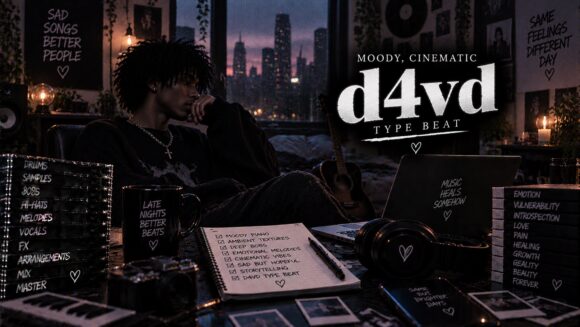
The meteoric rise of teenage singer-songwriter d4vd (David Burke) has reshaped the landscape of alternative pop and indie R&B. Exploding onto the scene with massive hits like “Romantic Homicide” and “Here With Me,” his music blends raw teenage angst, cinematic melancholy, and a distinct “recorded-in-a-closet” bedroom pop aesthetic. Surprisingly, d4vd famously crafted his early multi-platinum tracks entirely on his iPhone using the BandLab app.
Here is your comprehensive step-by-step production guide to making a moody, cinematic d4vd type beat from scratch.
1. Dial in the Slow-Burn Tempo and Key
A d4vd instrumental relies on slow, emotional tempos that leave plenty of breathing room for vulnerable, airy vocals.
- BPM Range: Keep the tempo between 65 and 85 BPM for that slow, drifting, or melancholic ballad feel.
- Scale Selection: Stick to Natural Minor scales for pure heartbreak, or use Major scales that feel bittersweet and nostalgic.
- Key Choices: G minor, C minor, or D major work incredibly well for lo-fi indie arrangements.
2. Record or Compose the Lo-Fi Indie Guitar Riff
The absolute centerpiece of almost every d4vd track is a moody, plucked electric guitar loop.
- The Progression: Write a simple 4-bar chord progression using extended chords (like Major 7ths or Minor 9ths) to capture an indie-pop aesthetic.
- Plucking Pattern: Instead of strumming chords, pluck individual notes sequentially to create a delicate, intimate movement.
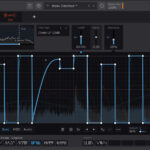
- Lo-Fi Effects: Apply heavy chorus, tape saturation, and a subtle pitch-wobble effect (using plugins like RC-20 Retro Color or Izotope Vinyl) to give the guitar a dusty, nostalgic texture.
- The Reverb Space: Wash the guitar in a spacious hall or plate reverb, cutting out the ultra-low frequencies to keep the mix clean.
3. Keep the Drums Minimal and Organic
Forget complex trap hi-hat rolls or heavy synthetic claps. A d4vd type beat requires sparse, organic percussion that mimics a lo-fi acoustic drum kit.
- The Snare/Rimshot: Use a warm, acoustic rimshot or a dry, low-mid snare hit on the 3rd beat of every bar. Keep it quiet and tucked back in the mix.
- Steady Hi-Hats: Program a straightforward, unquantized 8th-note pattern with low-velocity variations to mimic a real drummer playing gently.
- Muted Kicks: Choose a warm acoustic kick drum with very little high-end click. Keep the pattern incredibly simple—often just hitting on the 1st beat and a subtle ghost-note bounce before the snare.
4. Layer a Smooth, Warm Bassline
Because the guitar and vocals occupy the mid-to-high frequencies, the low end needs to provide a warm, foundational cushion.
- Sub-Bass vs. Electric Bass: You can use a clean, deep sub-bass for a more modern alternative R&B feel, or a smooth electric bass VST with a low-pass filter for an indie-rock vibe.
- Legato Flow: Let the bass notes ring out smoothly (legato) and follow the root notes of your guitar chord progression. Avoid sharp plucks or slides.
5. Arrange for Cinematic Atmosphere
d4vd’s music builds tension through emotional storytelling rather than energetic beat drops. Your arrangement should feel like an indie film soundtrack.
- Intro (8 Bars): Start with just the main guitar loop processed through a low-pass filter, making it sound like it’s playing from another room.
- Verse (16 Bars): Drop the filter and introduce the warm bassline and minimal drums. Keep the arrangement identical throughout the verse to let the vocals carry the emotion.
- The Chorus (8-16 Bars): Elevate the section by adding ambient synth pads, a faint counter-melody on an electric piano (Rhodes), or sweeping cinematic string swells in the background.
- Outro (8 Bars): Strip away the drums and bass, leaving only the main guitar loop slowly fading out into vinyl crackle or tape hiss.