Joe Moses is a definitive voice of the modern Los Angeles underground club scene. Best known for his explosive collaborations with DJ Mustard, Ty Dolla $ign, and YG, his signature sound is the epitome of the West Coast “ratchet” sub-genre. Making a Joe Moses type beat means crafting a minimalist, high-velocity, and incredibly bouncy instrumental driven by heavy low-ends and simple, rhythmic patterns designed to make the club shake.
Here is your step-by-step production guide to capturing that authentic, raw Los Angeles club bounce.
1. Lock In the High-Energy Club Tempo
Joe Moses beats thrive on movement and fast-paced dancing energy. The tempo must sit right in the pocket of modern West Coast club records.
- The Target Tempo: Set your DAW project tempo between 98 and 105 BPM.
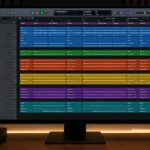
- The Groove: Enable a slight shuffle or swing quantization on your drum sequencer to move the percussion hits off the rigid digital grid, creating that signature human bounce.
2. Choose a Minimalist, Dry Sound Palette
Following the production styles of DJ Mustard and Larry Jayy, these beats are incredibly sparse. Ditch complex, layered chord progressions; you want a few distinct sounds that leave maximum room for an aggressive, rhythmic vocal delivery.
- The Lead Pluck: Use a dry, plucky sine-wave synthesizer, an analog woodblock sound, or a sharp synthetic marimba.
- The Scale: Write a simple 2-bar or 4-bar melody loop using a minor scale (like A Minor or E Minor) to give the track a confident, street-ready attitude. Space the notes far apart.
3. Layer the Iconic “Ratchet” Drums
The drum pattern is the actual driving force of a Joe Moses type beat. It needs to feel spacious but packed with relentless rhythmic energy.
- The Clap: Place your main digital clap strictly on the 2 and 4 beats of every bar.
- The Off-Beat Rimshot: This is mandatory for the authentic LA bounce. Place a sharp, metallic rimshot, woodblock, or percussion hit on the off-beats (the “and” of every beat).
- The Chant: Layer the classic “Hey!” or “Yeah!” vocal chant on the off-beats alongside your percussion to instantly inject club energy into the rhythm. Keep the hi-hats to a simple eighth-note pattern with occasional quick triplet rolls right before the clap.
4. Layer a Sub-Heavy, Bouncy 808 Bassline
The low end must dominate the entire track, providing a heavy thump that hits perfectly in a car or club sound system.
- The Selection: Pick a short-to-mid decay 808 bass with a perfectly clean sub-bass body and a slight bit of saturation so it cuts through phone speakers.
- The Pattern: Your 808 bassline should closely follow the rhythm of your kick drum hits. Keep the notes short, punchy, and bouncy, leaving distinct gaps of silence between the hits to create tension.
5. Arrange for Maximum Impact and Drops
Because the beat is so minimalistic, the arrangement must use sudden drops and formatting shifts to keep the listener engaged.
- The Intro: Start with just the naked melody pluck and the vocal chants for 4 to 8 bars to let the listener lock into the groove.
- The Main Drop: Explode into the first section by dropping the full drums, heavy kick, and bouncing 808 all at once.
- The Verse Breakdown: For the first 4 bars of the verse, drop out the heavy 808 and the kick drum entirely, leaving just the rhythmic claps, vocal chants, and the melody pluck. This creates a wide pocket for the rapper to establish a rapid-fire flow before the heavy low-end slams back in with maximum impact.