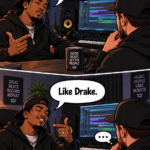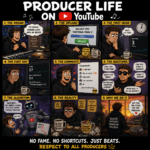

If you have ever worked with rappers, you probably know how quickly creative direction can change during a session. An artist can come into the studio with a very specific idea of what they want: something dark, aggressive, mysterious and heavy. The producer takes that description seriously and starts building exactly that kind of atmosphere.
The beat is finished, the artist hears it and everything seems to be going according to plan. Then comes the inevitable plot twist: “Can you make it happier?”
Suddenly, the dark beat isn’t dark enough in the right way. The artist still wants the drums, but perhaps the melody should feel more uplifting. Maybe the bass needs to be less threatening. Maybe the whole track needs a little more energy. The producer is left trying to figure out how a beat that was supposed to sound like midnight in an abandoned warehouse is now expected to feel like a sunny afternoon.
The problem with musical descriptions
One of the hardest parts of working with artists is that musical language is often incredibly subjective. When someone says they want a “dark” beat, they could be talking about the melody, the chords, the drums, the bass, the tempo or simply the overall feeling.
Two people can listen to exactly the same instrumental and have completely different opinions about whether it sounds dark.
The same thing happens with words like “happy,” “sad,” “aggressive,” “cinematic,” “emotional” or “energetic.” They are useful starting points, but they don’t always tell the producer exactly what needs to change.
That’s why producers often have to translate an artist’s emotional description into actual musical decisions.
When the artist changes direction
The funny part is that artists don’t always know exactly what they want until they hear it. Before the beat starts playing, they may have a very clear idea in their head. Once they hear the finished instrumental, however, they discover that the idea they imagined isn’t actually what they want.
That’s not necessarily a bad thing.
Music is a creative process, and sometimes hearing something is the only way to understand what needs to change. An artist might say they want a dark beat because they want something powerful and serious, but once they hear an extremely dark instrumental, they realize they still want some warmth or melody in it.
The producer’s job isn’t necessarily to follow the first instruction forever. It’s to understand what the artist is actually trying to achieve.
The producer’s translation skills
A good producer learns to ask better questions. If an artist says, “Make it happier,” that doesn’t necessarily mean adding cheerful piano chords and turning the whole thing into a summer anthem.
Maybe they want a brighter melody while keeping the drums aggressive. Maybe they want a more uplifting chord progression but still want the bass to sound heavy. Maybe the original beat simply felt too depressing.
A few questions can make a huge difference: What part feels too dark? Do you want the melody brighter, or the whole beat? Should it feel more energetic or more positive? Do you have a reference track that has the feeling you’re looking for?
The better the communication, the less time the producer spends guessing.
Sometimes the contradiction works
Interestingly, combining opposite ideas can produce something much more interesting than following a single mood. A dark instrumental with an uplifting melody can create tension. Aggressive drums combined with emotional chords can give a track personality. A melancholic melody over energetic production can make a song feel completely different from a typical rap beat.
So when an artist says, “I want it dark, but happier,” the request might sound ridiculous at first, but it could actually lead to a better record.
Some of the most memorable music comes from contrasts that shouldn’t work on paper but somehow work perfectly once you hear them.
The classic studio conversation
The producer plays the beat. The rapper listens carefully and nods. Everything seems perfect. Then the artist starts explaining what should change.
“Keep the drums.”
“Keep the bass.”
“Keep the rhythm.”
“But make the melody brighter.”
The producer pauses for a second and thinks about it.
Then the beat gets changed.
The artist listens again and says, “Yeah, that’s it.”
And suddenly everyone forgets that ten minutes earlier the brief was to make the darkest beat possible.
This is one of the realities of producing music. The first idea is often just the beginning of the conversation.
Good producers adapt
Being a producer isn’t only about knowing how to make drums hit or melodies sound good. It’s also about understanding people. Artists don’t always communicate their ideas using technical musical language, so the producer has to learn how to interpret those descriptions.
A rapper might not know exactly which chord needs to change or which frequency is making the beat feel too dark. They simply know that the track doesn’t feel right.
That’s where experience becomes important. A producer can take a vague comment and turn it into a practical adjustment.
And sometimes the answer really is as simple as changing the melody.
The lesson for artists
Artists can make the process much easier by explaining what they like about a beat rather than only saying what they don’t like. Instead of saying, “Make it happier,” they could say, “I like the drums, but the melody feels too depressing. Can we keep the same energy and make the chords more uplifting?”
That’s much easier for a producer to understand.
Reference tracks can also help enormously. Sending two or three examples of the mood you’re aiming for can communicate an idea much faster than trying to describe it with ten different adjectives.
The lesson for producers
Producers shouldn’t take changing instructions personally either. Creative direction evolves. An artist hearing the beat for the first time may discover something about the song that wasn’t obvious beforehand.
The key is knowing when to experiment and when to push back. Not every request will improve the track, and sometimes the producer has to explain why a particular change might hurt the overall sound.
The best collaborations aren’t about one person giving orders and the other person following them. They’re about two people trying to find the strongest version of the song.
And that’s why the studio is never predictable
A music session can start with a simple request and end somewhere completely different. The artist might ask for a dark beat, then request something happier, then decide they want it darker again after hearing the new version.
It can be frustrating, but it can also be hilarious.
Because behind almost every producer is a story about spending an hour making exactly what the artist requested, only to hear:
“Can you make it a little different?”
And that’s the reality of creative work. Sometimes the brief changes because the artist finally discovered what the song needed.
So if a rapper ever tells you, “I need a dark beat,” don’t be surprised if ten minutes later you’re being asked to make it happier.
Just keep the session open, save the original version and remember one important rule of music production: never delete the first version. 😂🎹