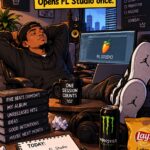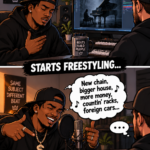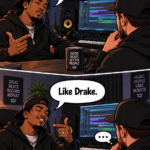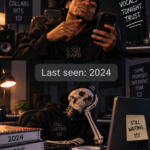
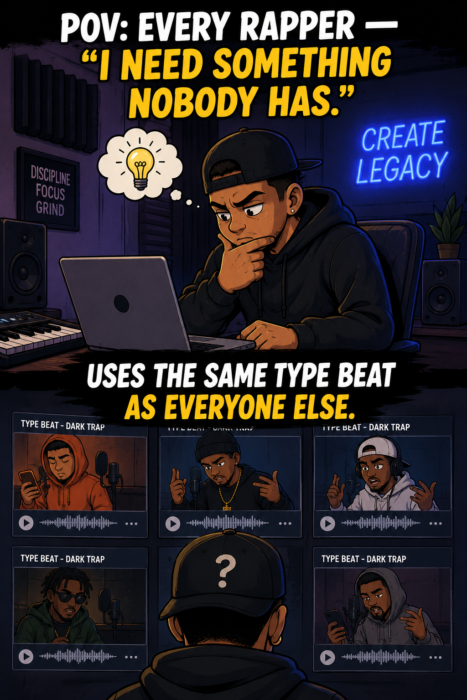
Every rapper wants to be original.
At least, that’s what they say.
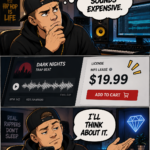
“I need something nobody has.”
Something different.
Something fresh.
Something that doesn’t sound like anything else.
The producer starts searching through sounds, building unusual melodies, experimenting with drums and trying to create something completely unique.
Then the rapper finds a beat.
He loves it.
There’s just one tiny problem.
Twenty other rappers are using the exact same type beat. 😂
The search for originality
There’s nothing wrong with using popular sounds.
Certain styles become popular for a reason. They sound good, they fit current trends and they give artists a familiar foundation to work with.
But sometimes an artist wants to sound completely different while choosing the most recognizable sound in the genre.
It’s like saying:
“I want to stand out from the crowd.”
And then standing directly in the middle of the crowd wearing exactly the same outfit.
“Make it different”
This is where producers sometimes get interesting requests.
“I want something nobody has heard before.”
“Make it darker.”
“But not too dark.”
“I want it melodic.”
“But still aggressive.”
“I want old-school drums.”
“But it needs to sound modern.”
“And make sure nobody else has anything like it.”
No pressure.
Just create a completely new genre before lunch. 😂
The type beat paradox
Type beats are incredibly useful for artists.
If you search for a specific style, you can quickly find beats that match the sound you’re looking for.
Want a dark trap beat?
There’s a type beat for that.
Melodic hip-hop?
Type beat.
Old-school boom bap?
Type beat.
Something that sounds like three completely different artists at the same time?
There’s probably a type beat for that too.
The problem isn’t type beats themselves.
The problem is expecting a familiar formula to automatically produce a completely unique result.
The artist still matters
Here’s the good news:
The same beat doesn’t automatically mean the same song.
Two rappers can use similar production and create completely different records.
Their voices are different.
Their flows are different.
Their lyrics are different.
Their delivery is different.
Their personalities are different.
That’s where originality really comes from.
A producer can give you a unique canvas, but the artist still has to paint something interesting on it.
Producers can help
If you genuinely want something different, tell your producer what you don’t want.
Instead of:
“Make me something nobody has.”
Try:
“I like this style, but can we avoid the usual drum pattern and try something unexpected in the hook?”
That’s a much more useful direction.
It gives the producer something to work with while still keeping the sound connected to what you like.
Sometimes one unusual sound, rhythm or arrangement can completely change the character of a beat.
You don’t need to reinvent rap
Being original doesn’t mean inventing an instrument nobody has ever heard.
It doesn’t mean creating a beat with 17 time signatures.
It doesn’t mean making music that nobody understands.
Sometimes originality comes from small decisions.
A different flow.
An unexpected pause.
A strange vocal texture.
A memorable hook.
A personal story.
A beat switch at exactly the right moment.
Those little details can make a familiar style feel completely different.
The funniest part
The real comedy happens when the rapper says:
“I need something nobody has.”
The producer spends three hours making something unusual.
The rapper listens for ten seconds and says:
“Can you make it sound more like the type beats I’m already using?”
And we’re back to square one. 😂
Be inspired, not identical
There is nothing wrong with taking inspiration from the sounds you love.
Every genre evolves because artists build on what came before.
The goal isn’t necessarily to sound like nobody else.
The goal is to sound like yourself, even when you’re working inside a familiar style.
So the next time you tell your producer:
“I need something nobody has.”
Maybe ask yourself one more question:
“What can I bring to the beat that nobody else can?”
That’s where the real originality starts.